
a local company with a global vision for soil health and plant vitality
Based in Grevenmacher, FERTILUX develops and manufactures eco-alternative fertilisers for agricultural professionals.
Using bio-based raw materials and co-products from other industries, the company develops solutions that aim to improve soil fertility and strengthen plant vitality while reducing the environmental impact of fertilisation.
From transport to production
The story began in France in 1990 with the establishment of FCA Fertilisants. Based in Vireux-Molhain in the Ardennes, the company manufactures and markets solid eco-fertilisers in granular form. Ten years later, FERTILUX was established in Luxembourg, initially to manage transport and logistics for the French site. The company also helped develop the group’s export activities, particularly in Central and Eastern Europe.
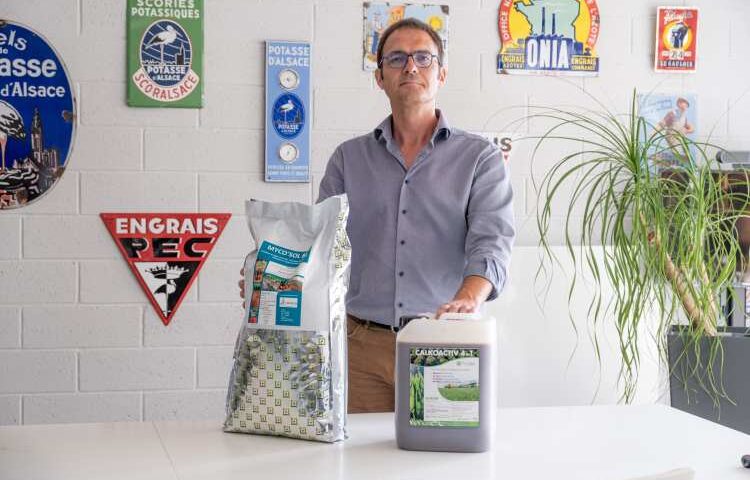
“Our Managing Director, Pascal Tronçon, wanted his own fleet of trucks to ensure deliveries to customers. FERTILUX subsequently developed an international trading business,” explains Sébastien David, Technical Engineer.
Over time, however, the company’s role changed. Transport was outsourced and FERTILUX shifted its focus from logistics to production.
An industrial site in Grevenmacher
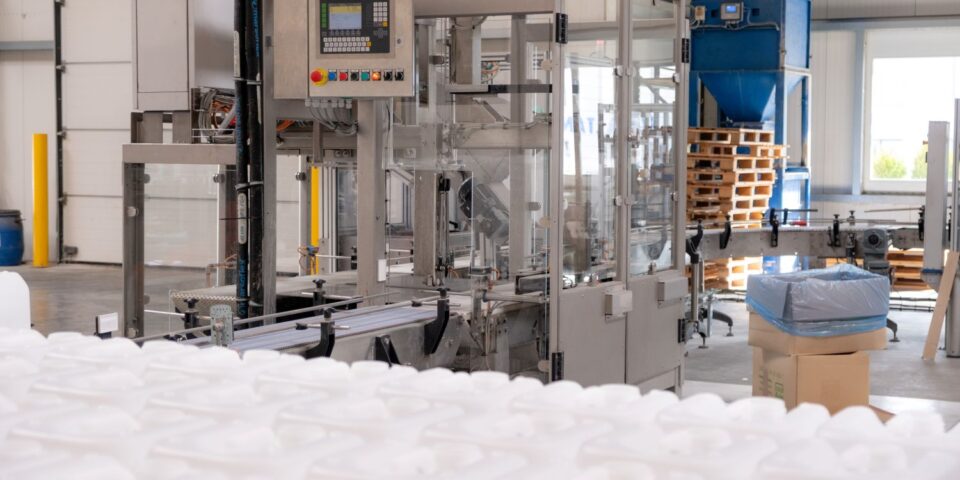
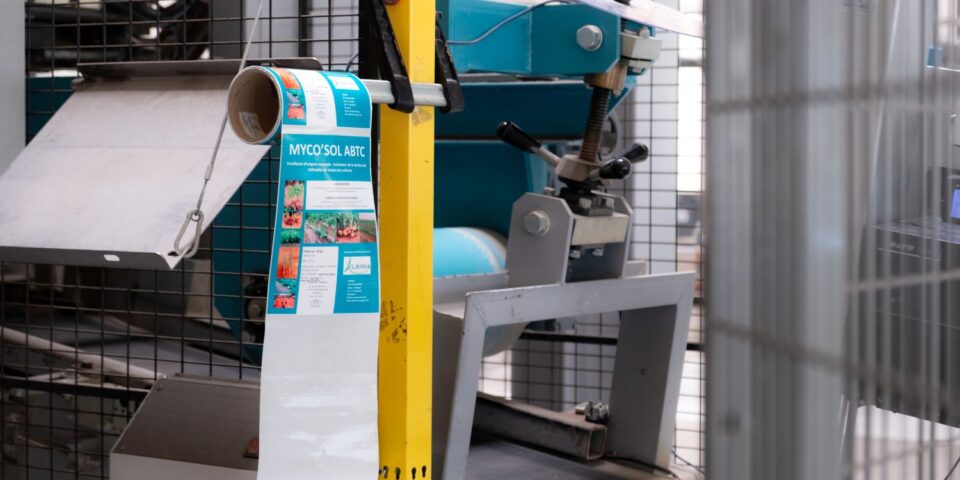
In 2015, FERTILUX submitted an industrial development project to the intermunicipal body responsible for the Potaschberg business park. The project was approved, and the company acquired a site with 6,000 m² of buildings. Production began there in 2017. The plant specialises in liquid fertilisers applied directly to plant leaves. It also has a bagging line for packaging solid fertilisers produced in France.
That shift took a significant step forward in 2015, when FERTILUX submitted an industrial development project to the intermunicipal body responsible for the Potaschberg business park. Following its approval, the company acquired a site with 6,000 m² of buildings, where production began in 2017.
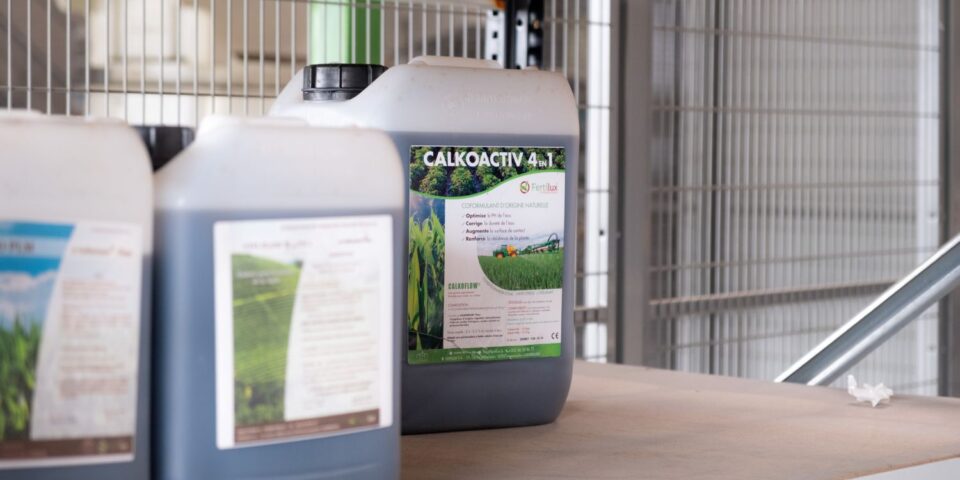
Today, the Grevenmacher plant specialises in liquid fertilisers applied directly to plant leaves. It also has a bagging line for packaging the solid fertilisers produced in France. The two sites therefore play complementary roles: solid products are manufactured in Vireux-Molhain, while liquid formulations are developed and produced in Grevenmacher.
“We offer eco-fertilisation solutions from root to leaf. Solid fertilisers nourish plants through the soil and roots, while liquid products provide foliar nutrition.”
FERTILUX works exclusively with agricultural professionals, with its products reaching the market through distributors, cooperatives and agricultural merchants.
Fertilisers rooted in the circular economy
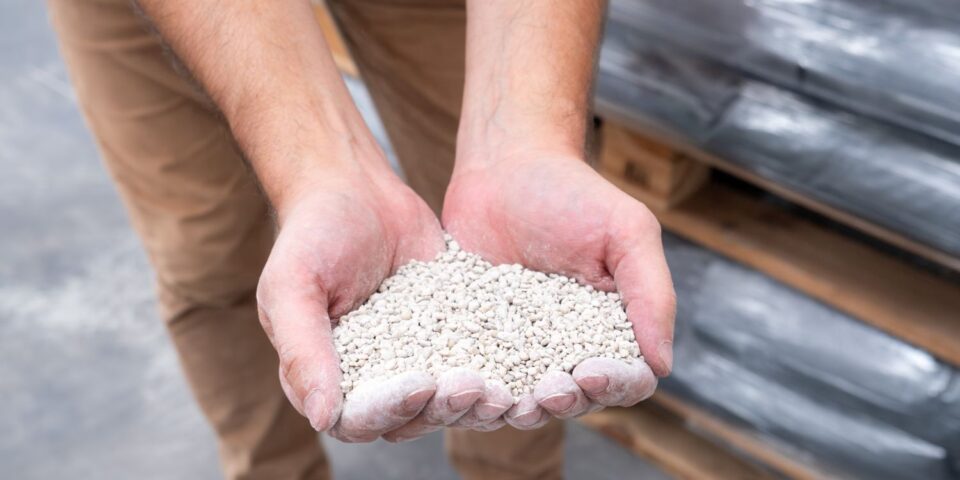
What distinguishes FERTILUX’s eco-alternative fertilisers begins with the way they are made. Rather than synthesising new molecules, the company combines bio-based raw materials with co-products, particularly those derived from agro-industrial activities. In doing so, it seeks to make use of existing resources while developing formulations tailored to plant and soil needs.
“We are not chemists, but more like cooks. Our expertise lies in blending raw materials and ensuring they are compatible with one another,” says Sébastien David.
The resulting formulations provide essential plant nutrients such as nitrogen, phosphorus and potassium, alongside trace elements, amino acids and sugars. Some also contain more specialised ingredients, including silicon, which the company uses in formulations designed to support plant resilience. The aim is to address several dimensions at once: plant nutrition and vitality, as well as the biological fertility of soils.
Innovation inspired by the field
Product development at FERTILUX starts not only in the laboratory, but also in the field. At its Grevenmacher site, the company has a laboratory dedicated to developing formulations, testing the compatibility of raw materials and assessing product stability. At the same time, discussions between sales representatives, distributors and farmers help identify needs on the ground. New solutions can then be adapted to different crops, soil characteristics and regional climatic conditions.
The SiliFlow biostimulant range emerged directly from this dialogue between the field and the laboratory. Among its applications, it has contributed to the development of a programme aimed at strengthening vines affected by the risk of esca, a serious grapevine disease for which winegrowers have limited options.
“Our approach is to support plant health proactively. As with human beings, a well-nourished organism is better equipped to defend itself.”
Improving soil health
Beyond plant nutrition, FERTILUX is also seeking to reduce the environmental footprint associated with fertilisation. According to the company, a life cycle assessment of its solid fertilisers, conducted in accordance with ISO 14067, found a significantly lower greenhouse gas footprint than that of conventional synthetic fertilisers.
The company also sees soil health as an important part of the equation. By supporting biological fertility, its solutions are designed to contribute to more resilient soils and, in turn, their capacity to store carbon.
“To address climate change, we need both to reduce emissions and restore the biological fertility of soils. That is at the heart of our work.”
Made in Luxembourg: a mark of quality
FERTILUX has held the Made in Luxembourg label since January 2020 for its eco-alternative fertilisers and supplementary fertilisation products. For the company, this recognition represents a mark of reliability, quality and innovation, that carries particular value in international markets.
“Luxembourg enjoys an excellent reputation abroad. For our customers in France, Poland, Romania, Côte d’Ivoire and Senegal, the label reinforces our professionalism and the quality of our products.”
Looking ahead, FERTILUX aims to expand its commercial reach while strengthening its position in the field of soil health. Its ambition can ultimately be summed up in a simple principle: “Healthy soils support healthy plants.”